
You’ve probably been thinking about this for a while. Cooking outside, hosting friends on a Saturday night, finally having a space where the grill, the drinks, and the conversation all happen in the same spot. An outdoor kitchen in north Houston makes sense, the climate allows year-round use, the backyard culture is strong, and it’s one of the best upgrades you can make to your home.
But before you start picking out grills or browsing countertop samples, there are a few things worth thinking through. The decisions you make early on about placement, materials, coverage, and utilities are what separate an outdoor kitchen you actually use every week from one that looks great but sits empty.
This guide covers what matters most, specifically for homeowners in Spring, The Woodlands, Tomball, and the surrounding north Houston communities.
Why Houston’s climate should shape every design decision
An outdoor kitchen in Arizona is a completely different project than one in our area. Houston’s subtropical climate creates three specific challenges that should influence every choice you make.
Humidity is the silent problem. It’s not just about comfort — it affects your materials, your appliances, and how the space feels when you’re standing over a hot grill in July. Stainless steel without proper coating develops surface corrosion. Wood framing swells and contracts. Unsealed stone traps moisture and stains. Every material you select needs to be tested against year-round humidity, not just heat.
Sun exposure is relentless from May through September. An uncovered outdoor kitchen facing west is essentially unusable during peak afternoon hours. The surface temperature on dark countertops can exceed 150°F in direct sun, making food prep uncomfortable and potentially warping certain materials. Orientation and coverage aren’t upgrades — they’re requirements.
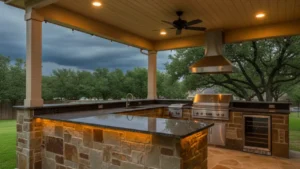
Sudden storms are part of life here. The north Houston corridor — from Spring through The Woodlands and up to Conroe receives heavy afternoon storms during spring and summer. Wind, rain, and occasional hail mean your outdoor kitchen needs overhead protection and your appliances need either built-in weatherproofing or easy-access covers. If you’re planning to include electronics, a TV, or a sound system, this becomes even more critical.
The good news: when you design around these conditions instead of ignoring them, you end up with a kitchen that works 12 months a year. That’s what separates a smart build from a pretty one. If you’re also weighing what type of overhead structure works best, choosing the right cover for your outdoor space is a great place to start.
Start with the layout, not the appliances
This is the most common mistake homeowners make: they fall in love with a grill, a smoker, or a pizza oven, and then try to build the kitchen around it. The better approach is to start with how the space flows and then select equipment that fits.
Think about the relationship with your house first. Where is the back door? Is your indoor kitchen nearby? If you can position the outdoor kitchen within a few steps of the house, you gain a natural pass-through. That means you don’t need to duplicate everything outside — your indoor fridge and sink are right there. This keeps the outdoor setup simpler, more efficient, and more enjoyable to use.
Every functional outdoor kitchen has three zones. The prep zone is where you cut, season, and organize — it needs counter space and ideally a small sink. The cooking zone is the grill, burners, and smoker area. The serving zone is where plated food, drinks, and guests converge — a counter, bar top, or adjacent table. These don’t need to be massive, but they need to exist as separate areas so you’re not chopping onions where someone is trying to pour a drink.
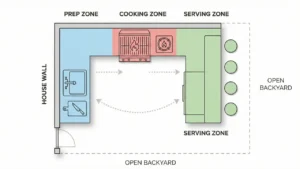
Circulation matters more than you think. If your backyard has a pool, a seating area, and a kitchen, people will be moving between all three. The cook shouldn’t be in the middle of that traffic. An L-shaped or U-shaped layout naturally separates the cooking zone from the social flow, so the chef can work while guests move freely.
Watch the wind. In north Houston, prevailing winds typically come from the south and southeast. Position the grill so smoke travels away from the seating and dining area, not directly into it. It sounds obvious, but it’s one of those things you only notice after the kitchen is built and by then it’s too late.
Want to see how layout decisions come together in finished projects? See how this looks in real projects.
Materials that hold up to Texas heat and humidity
You don’t need to become a materials expert, but knowing what works well in this climate and what doesn’t — will save you from expensive mistakes and frustrating maintenance.
Countertops: granite and quartzite are your best options here. Both handle direct heat from pots and pans, resist staining from food and grease, and hold up well against Houston’s humidity. Granite is widely available and comes in dozens of finishes. Quartzite offers a similar look to marble without the porosity problem — and marble is the one material you should avoid outdoors. It stains easily, etches from acidic foods, and absorbs moisture. Concrete countertops are another option but require regular sealing in this climate to prevent cracking and discoloration.
For the island base, think durability over aesthetics. Concrete block with stone veneer is the most reliable construction method for our area. It doesn’t rust, doesn’t warp, and provides a solid foundation for heavy countertops and built-in appliances. Steel frame construction is faster but needs high-quality powder coating or marine-grade treatment to resist corrosion in Houston’s humidity. Wood framing in exposed areas is generally not recommended — it absorbs moisture, swells, and deteriorates faster than most homeowners expect.
Flooring around the kitchen needs texture. This is a zone where water, grease, and foot traffic all meet. Travertine, porcelain tile, and concrete pavers with a textured finish all work well. Avoid very dark surfaces — they absorb heat and become uncomfortable to stand on barefoot. Also avoid highly polished finishes, which get dangerously slippery when wet. If you want a cohesive look, our approach to selecting durable materials for Houston backyards covers how we match these choices to each home.
The hidden details most homeowners overlook
This is the part of the project that doesn’t show up on Pinterest boards but makes or breaks your outdoor kitchen experience. Utilities, permits, and local regulations are where the real planning happens.
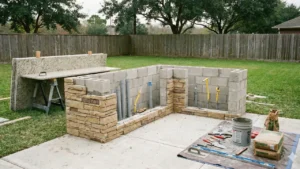
Gas line connection. If you plan to use your outdoor kitchen regularly — and you should, that’s the whole point — natural gas is far more practical than propane tanks. No refills, consistent flame, and cleaner operation. But running a gas line from your house to the kitchen requires a licensed plumber, a city permit, and proper pressure testing. The closer the kitchen is to your home’s gas meter, the simpler and faster this process goes.
Electrical work. At minimum, you’ll need dedicated circuits for lighting and any refrigeration or appliances. If you’re adding under-counter lights, a ceiling fan, outlets for small appliances, or an outdoor TV, this needs to be planned during the design phase — not after construction starts. Retrofitting electrical into a finished island is expensive and disruptive.
Plumbing for a sink and drainage. A sink is one of those features that seems optional until you start cooking outside regularly. Running back inside to wash your hands or rinse vegetables gets old fast. If you include one, it needs a water supply line and a proper drain, which means plumbing permits and connection to your home’s system.
HOA regulations and building permits. This is especially important in master-planned communities across north Houston. In neighborhoods like Woodson’s Reserve, Bender’s Landing, Augusta Pines, and Creekside Park, the HOA has specific rules about exterior structures: maximum height, approved materials, setback distances from the property line, and sometimes even color palettes. A builder who already knows these neighborhoods across north Houston can navigate the approval process in days instead of weeks.
When to start planning (and why now is the right time)
A custom outdoor kitchen isn’t a weekend project. From the first consultation through design, permitting, construction, and finishing, the process typically spans several weeks. If you’re reading this in late winter or early spring and you want to be grilling on your new setup by the time warm-weather weekends hit, the time to start that first conversation is now.
There’s also a practical scheduling reality: spring is peak season for outdoor construction in Houston. Builders book up, lead times on materials stretch, and the window for comfortable construction weather narrows as summer heat sets in. Homeowners who plan earlier get more flexibility in design choices, material availability, and scheduling.
You don’t need to have everything figured out before reaching out. A good builder will walk your property, listen to how you want to use the space, and help you think through what makes sense — before any commitment. That first conversation is where the best projects start. If you’ve been thinking about getting your space ready before spring, now is the ideal moment to take the first step.
How Tejas Patios & Outdoors approaches outdoor kitchen projects

Everything you just read — the climate planning, the layout thinking, the material selection, the permit navigation — is exactly how we approach every outdoor kitchen project at Tejas Patios & Outdoors.
We’re a family-owned company led by brothers Hector and Alexis García, and we build custom outdoor spaces exclusively in the north Houston area. Spring, The Woodlands, Tomball, Magnolia — these are the communities we live and work in, and that local knowledge shows up in every project. We know which HOAs require architectural review. We know which soil conditions need reinforced footings. We know what materials perform best in this specific climate.
Our process starts with a free, in-person consultation at your property. We walk the space with you, listen to what you want, and start thinking about what’s possible — not from a template, but from your actual backyard, your home’s architecture, and the way your family lives.
From design through construction, you’ll work directly with our team. No subcontractor hand-offs, no generic plans pulled from a catalog. Every outdoor kitchen we build is designed for the specific homeowner, the specific property, and the specific way they want to enjoy their outdoor space. Meet the team behind every project.
Ready to start planning your outdoor kitchen?
Schedule an in-person consultation and let’s talk about what’s possible for your backyard.

